Dimensional stability and good electrical properties
Perfect for prototypes and functional parts
Request a custom quote for your required quantities and get the best price.
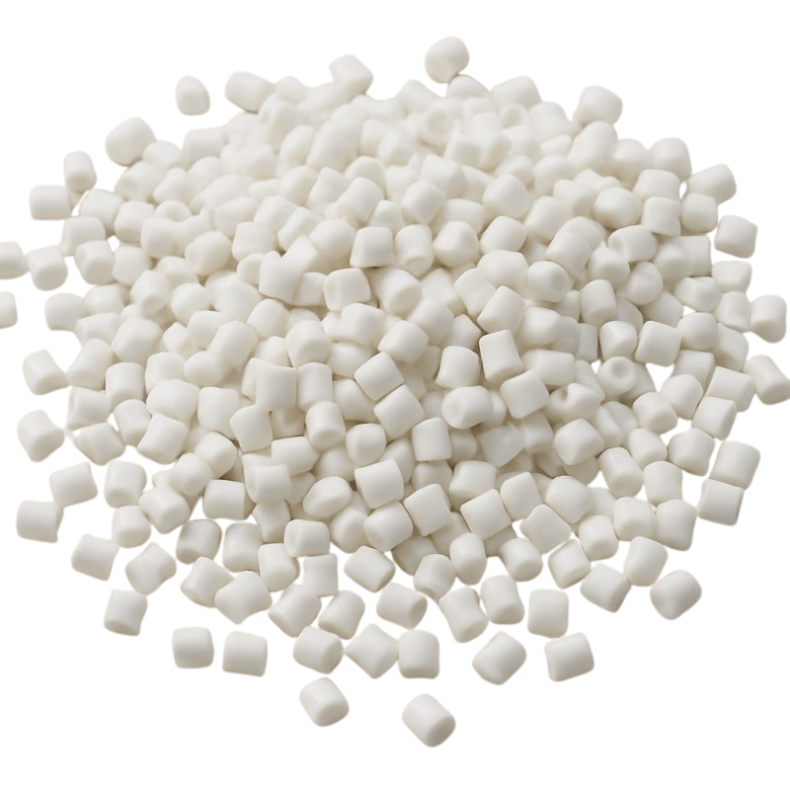
ABS pellets for 3D printing and industrial use — impact resistance, durability, and dimensional stability.
ABS pellets for 3D printing provide an excellent balance of impact resistance, dimensional stability, and electrical properties. The material performs well at low temperatures and against chemicals, making it suitable for functional parts, technical prototypes, and industrial applications. ABS is the right choice when reliability, durability, and ease of processing are needed, ensuring consistent results in demanding 3D printing projects.
Product Technical Instructions
Basic Information
Form
Particle
Processing method
Extrude
Physical Properties
Specific gravity
1.04 g/cm³ (ASTM D792, ISO 1183)
Melt flow rate (220°C/10.0kg)
3.0 g/10 min (ASTM D1238, ISO 1133)
Shrinkage-Flow
0.40–0.70% (Internal methods)
Hardness
Rockwell hardness, Class R, 23°C
100 (ASTM D785)
R meter scale, 23°C
100 (ISO 2039-2)
Mechanical Behavior
Tensile strength (23°C)
42.1 MPa (ASTM D638)
Tensile strength (23°C)
42.0 MPa (ISO 527-2)
Flexural modulus (23°C)
2250 MPa (ASTM D790, ISO 178)
Bending strength (23°C)
68.0 MPa (ASTM D790, ISO 178)
Impact Properties
Unnotched Izod Impact (23°C, 6.35 mm)
380 J/m (ISO 180, ASTM D256)
Thermal Properties
Thermal deformation temperature under load (1.8 MPa, not annealed, 12.7 mm)
86.0°C (ASTM D648, ISO 75-2/A)
Thermal deformation temperature (1.8 MPa, annealed)